Digital Marketing for Small Businesses: Complete Guide for Growth
- Date:July 26, 2026
- Author:Jagriti Lakher
Table of Contents
KEY INSIGHTS
- Connect with customers through digital marketing. Use your website, search engines, social media, email, and online ads.
- Digital marketing is cost-effective and provides measurable results.
- Mix SEO, content marketing, social media, paid ads, and email marketing to drive growth.
- Set clear goals, understand your target audience, and follow a marketing plan.
- Build a fast, mobile-friendly, and user-friendly website.
- Track your marketing performance regularly using tools like Google Analytics.
- Choose marketing professionals with relevant experience, transparent pricing, and proven results.
- Avoid common mistakes. Don’t ignore SEO. Post consistently. Also, don’t run ads without a clear strategy.
- Keep your Google Business Profile up-to-date and respond to customer reviews.
- Keep producing high-quality content. This builds trust and helps your business grow over time.
QUICKS
- How Much Should a Digital Marketing Budget Be?
Start with a small digital marketing budget and increase it as you see a positive ROI
- Best Marketing Channels Together?
SEO, content marketing, and social media together work best for most small businesses
- When Does SEO Show Results?
SEO takes time, with noticeable results usually appearing within a few months
- Why Hire a Marketing Agency?
Hiring a digital marketing agency saves time. It also boosts results with expert support.
- Which Social Platform to Choose?
Choose social media platforms based on where your target audience is most active.
- How to Measure Marketing Success?
Track success using key metrics. Focus on website traffic, leads, conversions, engagement, CTR, and ROI
What is digital marketing?
Digital marketing means promoting your business using online channels instead of traditional methods like newspaper ads or flyers. This includes your website, search engines, social media, email, and paid ads.
Having an online presence can help any small business, regardless of its industry. Your customers are already looking for products and services like yours on Google and scrolling through Instagram and Facebook.
If you’re not there, they’ll go to your competitor. So what’s different about this than traditional marketing?
Traditional marketing is based on one-way communication, such as billboards, TV commercials, or print ads. Conversely, digital marketing is interactive.
You can talk directly to your customers, answer their questions, and see exactly how well your campaigns are performing. This makes online marketing for small businesses far more flexible and cost-effective than older methods.
Why Digital Marketing is Important for Small Businesses?
Many small business owners assume marketing is only for big companies with big budgets. That’s simply not true anymore.
Here’s why digital marketing matters so much:
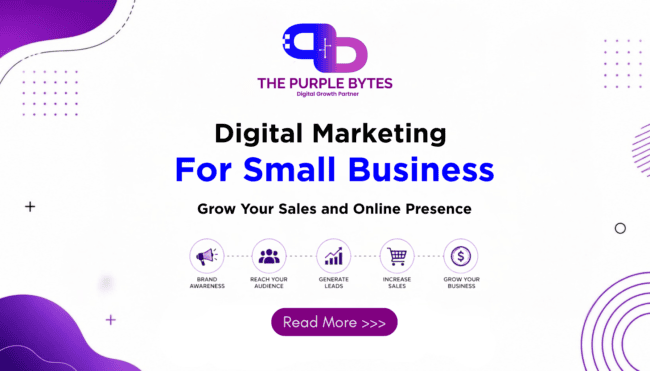
Reach more customers.
Instead of only relying on people walking past your store, you can reach customers in your city, state, or even worldwide.
Build brand awareness.
Consistent posting and content help people recognize and remember your business.
Generate quality leads.
Digital marketing lets you target people who are actually interested in what you offer, not just anyone who happens to see an ad.
Increase sales
More visibility and trust naturally lead to more conversions and repeat customers.
Improve customer trust.
Reviews, testimonials, and helpful content show potential customers that you’re reliable.
Cost-effective marketing.
Compared to traditional advertising, digital campaigns often cost far less while delivering better results.
Measurable results.
You can track exactly how many people saw your ad, clicked on your website, or made a purchase, something traditional marketing can rarely offer.
One of the biggest advantages of digital marketing for small businesses is that you don’t need a huge budget to begin. Spending a few hours a week on social media or a blog can really add up over time.
Best Digital Marketing Strategies for Small Businesses
The best digital marketing strategies for small businesses include SEO, social media, content marketing, email marketing, and paid ads. Using the right mix of these channels can increase visibility, attract customers, and grow your business.
There’s no single “best” strategy; successful businesses usually combine a few of these.
Search Engine Optimization (SEO)
SEO helps your website show up when people search for your products or services on Google. Learn more in Google’s SEO Starter Guide.
- Keyword research: Finding the exact words your customers type into Google
- Local SEO: Optimizing your business for “near me” searches
- On-page SEO: Improving titles, headings, and content on your website
- Technical SEO: Making sure your site loads fast and works well on mobile
If you only do one thing this year, focus on SEO. It brings long-term, consistent traffic without ongoing ad spend.
Content Marketing
Content marketing means creating helpful material that answers your customers’ questions. This includes:
- Blog posts
- Videos
- Infographics
- Case studies
- Educational guides
Good content builds trust and positions you as an expert in your field long before a customer even decides to buy.
Social Media Marketing
Platforms like Facebook, Instagram, LinkedIn, TikTok, and YouTube let you connect with your audience directly. The key is consistency. Posting regularly, even simple behind-the-scenes content, helps build familiarity and trust over time. Customers are far more likely to buy from a business they recognize and feel connected to.
Google Ads & Meta Ads
Paid advertising through Google Ads and Meta Ads (Facebook/Instagram) allows you to target specific customers based on location, interests, and behavior. The biggest benefits include the following:
- Fast results compared to organic strategies
- Budget-friendly options: you control how much you spend
- Precise targeting so your ads reach the right people
- Strong lead generation potential
You don’t need thousands of dollars to start. Many small businesses see results with modest daily budgets.
Email Marketing
Email remains one of the highest ROI channels available. It’s perfect for:
- Building an email list of interested customers
- Sending newsletters with updates and tips
- Running promotions and special offers
- Improving customer retention through consistent communication
- For best practices, see the Mailchimp Email Marketing Guide.
These digital marketing strategies for small businesses work best when combined rather than used in isolation. For example, a blog post (content marketing) can be shared on social media, promoted with a small ad budget, and used to grow your email list.
How to Create a Digital Marketing Plan for a Small Business?
A digital marketing plan helps small businesses set clear goals, identify the right audience, choose effective marketing channels, and measure results. A well-structured plan ensures consistent growth and better marketing decisions.
A solid digital marketing plan for a small business doesn’t need to be complicated. Follow these steps:
Define your business goals.
Start by identifying what you want to achieve through digital marketing. Whether your goal is increasing sales, generating more leads, improving brand awareness, or attracting local customers, having clear objectives helps you create a focused and effective marketing strategy.
Identify your target audience.
Understand who your ideal customers are by researching their age, location, interests, online behavior, and pain points. The better you know your audience, the easier it is to create content and campaigns that connect with them.
Research your competitors.
Analyze what your competitors are doing online, including their website, social media, SEO, and advertising strategies. Learn from their strengths, identify their weaknesses, and find opportunities to make your business stand out.
Build a website.
Your website is your digital storefront and often the first impression customers have of your business. Make sure it is fast, mobile-friendly, easy to navigate, and clearly communicates your products or services while encouraging visitors to take action.
Improve your SEO
Optimize your website for the keywords your potential customers are searching for. Good SEO helps your business rank higher on search engines, increases organic traffic, and makes it easier for people to find your products or services.
Create quality content.
Publish valuable and relevant content that answers your customers’ questions, solves their problems, and builds trust. Consistent, high-quality content also improves your SEO and positions your business as an industry expert.
Use social media.
Focus on one or two social media platforms where your target audience is most active. Share engaging content, interact with your followers, and build meaningful relationships that strengthen your brand and encourage customer loyalty.
Run paid ads
Use platforms like Google Ads or Meta Ads to reach the right audience quickly. Start with a small budget, monitor your campaign performance, and gradually increase your investment in the ads that deliver the best results.
Measure results using analytics
Track key metrics such as website traffic, conversions, engagement, and return on investment (ROI). Regularly reviewing your data helps you understand what’s working, identify areas for improvement, and make smarter marketing decisions.
A clear digital marketing strategy plan for a small business removes guesswork and helps you focus your time and budget on what actually drives results.
Choosing the Right Digital Marketing Service
At some point, many small business owners consider hiring help. This makes sense if you’re short on time, unsure where to start, or want faster results.
You’ll typically come across a few options:
- A digital marketing company for small businesses offers full-service marketing across multiple channels.
- A digital marketing consultant for small businesses provides strategy and guidance, often on a part-time basis.
- A digital marketing service for small businesses may specialize in one area, like SEO or social media.
When looking for the best digital marketing service for small businesses, consider:
- Their experience with businesses similar to yours
- Clear reporting and communication
- Transparent pricing with a digital marketing package for small businesses that fits your budget
- Case studies or references showing real results
A good digital marketing solution for small businesses should feel like a partnership, not just an outsourced task.
Common Digital Marketing Mistakes to Avoid
Avoiding common digital marketing mistakes, such as ignoring SEO, inconsistent posting, and not tracking results, can improve your marketing performance. A clear strategy and regular optimization help drive better long-term growth.
Even well-meaning business owners fall into these traps:
- Ignoring SEO
- Inconsistent posting
- Not tracking results
- Poor website experience
- Not optimizing for mobile devices.
- Running ads without a strategy
- Ignoring customer reviews
Avoiding these mistakes alone can put you ahead of many competitors who are making them right now.
Quick Digital Marketing Tips for Small Business Owners
Small changes can make a big impact. Focus on SEO, create valuable content, stay active on social media, track your results, and engage with your audience to grow your business consistently.
Here are practical digital marketing tips for small business owners you can apply this week:
- Keep your Google Business Profile updated with accurate hours and photos.
- Focus on local SEO if you serve a specific city or region.
- Publish helpful blog content regularly, even just once or twice a month.
- Use high-quality images and videos across your website and social media.
- Respond to customer reviews, both positive and negative.
Frequently Asked Questions (FAQs)
How much should a small business spend on digital marketing?
This varies widely, but many small businesses start with a modest monthly budget and scale up as they see results. The key is to start small and track ROI before increasing spend.
What is the best digital marketing strategy for a small business?
There’s no one-size-fits-all answer, but combining SEO, content marketing, and social media typically delivers strong, sustainable results for most small businesses.
How long does SEO take to show results?
SEO is a long-term strategy. Most businesses start seeing meaningful results within a few months, with continued growth over time as authority builds.
Should small businesses hire a digital marketing agency?
It depends on your time, budget, and expertise. If you’re short on time or unsure where to start, a consultant or agency can help you move faster and avoid costly mistakes.
Which social media platform is best for small businesses?
The best platform depends on your target audience. Facebook and Instagram are great for local businesses and B2C brands, while LinkedIn is ideal for B2B companies. Choose the platforms where your customers are most active.
How do I measure the success of my digital marketing campaigns?
Track key performance indicators (KPIs) such as website traffic, conversion rate, lead generation, engagement, click-through rate (CTR), and return on investment (ROI). Reviewing these metrics regularly helps you improve your marketing strategy over time.
Conclusion
Digital marketing for small businesses is about choosing the right strategies, staying consistent, and measuring your results.
By focusing on tactics like SEO, social media, content marketing, and paid advertising, you can build your online presence, attract more customers, and achieve sustainable business growth over time.
Ready to grow your small business online?
Whether you need help with SEO, social media, content creation, or paid advertising, our team can build a customized digital marketing strategy tailored to your goals.
Contact us today for affordable digital marketing for small businesses, get a free consultation, and take the first step toward growing your online presence.
Author

Jagriti Lakher
Jagriti Lakher is the Founder and Managing Director of Purple Bytes Private Limited, a technology-driven company focused on helping businesses succeed through innovative digital solutions, strategic marketing, and modern software development.
Found this useful?
Share this article with your network
Website Development for Education & Migration Agencies: 9 Must-Have Features